💨 The Frustrating Truth About Reappearing Dust
It is the most common complaint we hear after a renovation: "We cleaned everything, so why is there still dust everywhere?" You wiped the counters, vacuumed the floors, even ran a cloth along the baseboards. Then you turned on the heat, walked back in the next morning, and every flat surface had a fresh grey film.
You are not doing anything wrong — you are fighting physics. Post-construction dust is not ordinary household dust. Cutting, sanding, and drilling drywall, wood, tile, and concrete releases ultrafine particulate so light it can stay airborne for days, drifting from room to room and resettling long after the visible mess is gone. Until every reservoir of that dust is removed, it will keep coming back no matter how many times you wipe.
This guide explains exactly where that hidden dust lives, the five reasons it reappears, and the professional method that finally ends the cycle.
🔍 Where Hidden Construction Dust Actually Lives
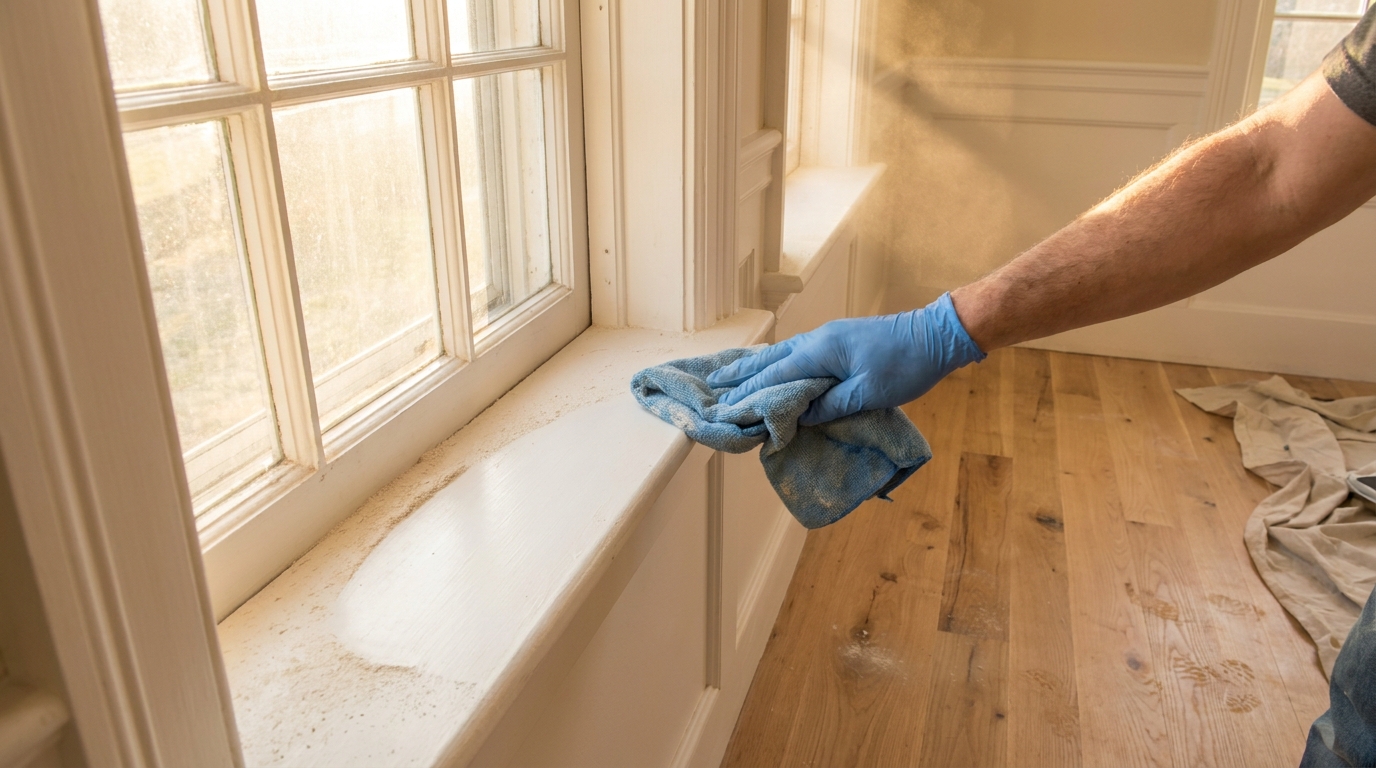
The dust you can see on a countertop is a tiny fraction of what a renovation leaves behind. The rest hides in places a normal cleaning never touches — and every time air moves through your home, those reservoirs release a little more onto your clean surfaces.
- HVAC ducts and returns. During construction, your heating and cooling system pulls in airborne dust and coats the inside of the ductwork. Every time the system cycles on, it blows a fresh layer of dust across the whole house.
- On top of cabinets, trim, and door casings. High horizontal ledges collect dust you cannot see from standing height.
- Inside light fixtures and recessed cans. Warm air rising past hot bulbs lifts settled dust back into the room.
- Window and door tracks. Deep channels trap drywall powder that puffs out every time you open them.
- Behind and beneath appliances, and inside closets. Still-air pockets that hold dust for weeks.
Miss any one of these and you have left a reservoir that will re-dust your home for weeks.
📞 Get your free estimate today! Text or call 781-330-5604 · bluebrickmass@gmail.com
⚠️ The 5 Reasons Your Dust Won't Go Away
1. Dry dusting instead of trapping
A dry cloth or feather duster does not remove fine dust — it launches it back into the air, where it floats for hours and resettles somewhere else. The single most common mistake is dry dusting. Professionals use microfiber and HEPA-filtered vacuums that capture particles instead of relocating them.
2. Cleaning too soon
If you clean while ultrafine dust is still airborne, you are cleaning under a slow-motion snowstorm. Best practice is to wait 24 to 48 hours after the last dust-producing work so the air can settle before the final clean.
3. Never touching the HVAC
If you do not change the furnace filter and clean the registers, your system keeps redistributing construction dust every cycle. Change the HVAC filter immediately after the rough clean — it clogs far faster than normal.
4. Consumer-grade equipment
A standard shop vac or household vacuum without true HEPA filtration blows the finest, most irritating particles straight through the filter and back into the room.
5. A single pass
Fine dust settles in waves. One cleaning removes the first wave; the second and third waves settle over the following days. Without a follow-up pass, the dust simply reappears.
The pattern is always the same: hidden reservoirs + wrong technique + no follow-up = dust that never quite goes away. Fix all three and it stops.
Win a Free Cleaning
Enter your email for a chance to win a complimentary home cleaning every month.
✅ The Right Way: Settle, Trap, and Repeat
Here is the process our crews use to break the cycle for good across Greater Boston:
- Let it settle. We schedule the detailed clean 24–48 hours after the last dusty work so airborne particulate has come to rest.
- Top-to-bottom, trap don't spread. We work high to low with HEPA vacuums and damp microfiber so dislodged dust falls onto not-yet-cleaned surfaces and is captured, never launched back into the air.
- Address every reservoir. Cabinet tops, trim, light fixtures, tracks, closets, and behind appliances — not just the visible surfaces.
- Reset the HVAC. We wipe registers and returns and recommend a fresh filter so the system stops recirculating dust.
- Return for the second wave. A follow-up touch-up pass catches the dust that settles over the next few days — the step that actually ends the problem.
🗺️ Serving All of Greater Boston
We remove reappearing post-construction dust for homeowners, contractors, and property managers throughout Greater Boston. Wherever your renovation was, we can settle the dust for good.
Ready to get started? Text 781-330-5604 for a free, no-obligation estimate. We respond fast and can usually schedule within days.
❓ Frequently Asked Questions
Why does construction dust keep coming back after I clean?
Because fine renovation dust hides in reservoirs your cleaning never reaches — inside HVAC ducts, on top of cabinets and trim, in light fixtures, and in window tracks. Every time air moves through the home, those reservoirs release more dust onto your clean surfaces. It also settles in waves over several days, so a single cleaning only removes the first wave.
How long does post-construction dust keep settling?
Ultrafine drywall and silica dust can stay airborne for several days and continue resettling for one to two weeks after the work is done, especially once your HVAC system starts running. This is why a follow-up cleaning pass is so effective.
Should I change my HVAC filter after a renovation?
Yes — immediately after the rough clean and again after the final clean. Construction dust loads filters far faster than normal household use, and a clogged filter lets the system blow dust back into your rooms.
Can I get rid of reappearing dust myself?
You can reduce it by using a true HEPA vacuum, damp microfiber instead of dry dusting, waiting 24–48 hours before cleaning, and doing a second pass a few days later. For whole-home renovations, a professional crew with HEPA equipment that also addresses the HVAC and hidden reservoirs is the reliable fix.
Do you offer a follow-up visit for settling dust?
Yes. Our post-construction service includes a phased approach with an optional follow-up touch-up pass to capture the dust that settles in the days after the initial deep clean. Text 781-330-5604 for details.