🫁 What's Really in Post-Construction Dust
Post-construction dust looks like ordinary grey powder, but under a microscope it is a mix of materials your lungs were never meant to handle. Every trade that cuts, sands, or drills adds something to it.
- Crystalline silica from concrete, mortar, tile, and drywall joint compound — the most concerning component, small enough to reach deep into the lungs.
- Fine wood dust from framing, trim, and flooring, a known respiratory irritant and allergen.
- Drywall (gypsum) dust, extremely fine and slow to settle.
- VOCs and chemical residue from paints, adhesives, sealants, and finishes.
- Insulation fibers and, in older homes, disturbed particulate from demolition.
Because these particles are so fine, they stay airborne for days and settle everywhere — then get stirred back up with every footstep, every HVAC cycle, and every time a child plays on the floor.
⚕️ The Health Risks — Especially for the Vulnerable
For a healthy adult, brief exposure to settled renovation dust is usually a short-term irritant. The concern is prolonged exposure and the members of your household who are most sensitive:
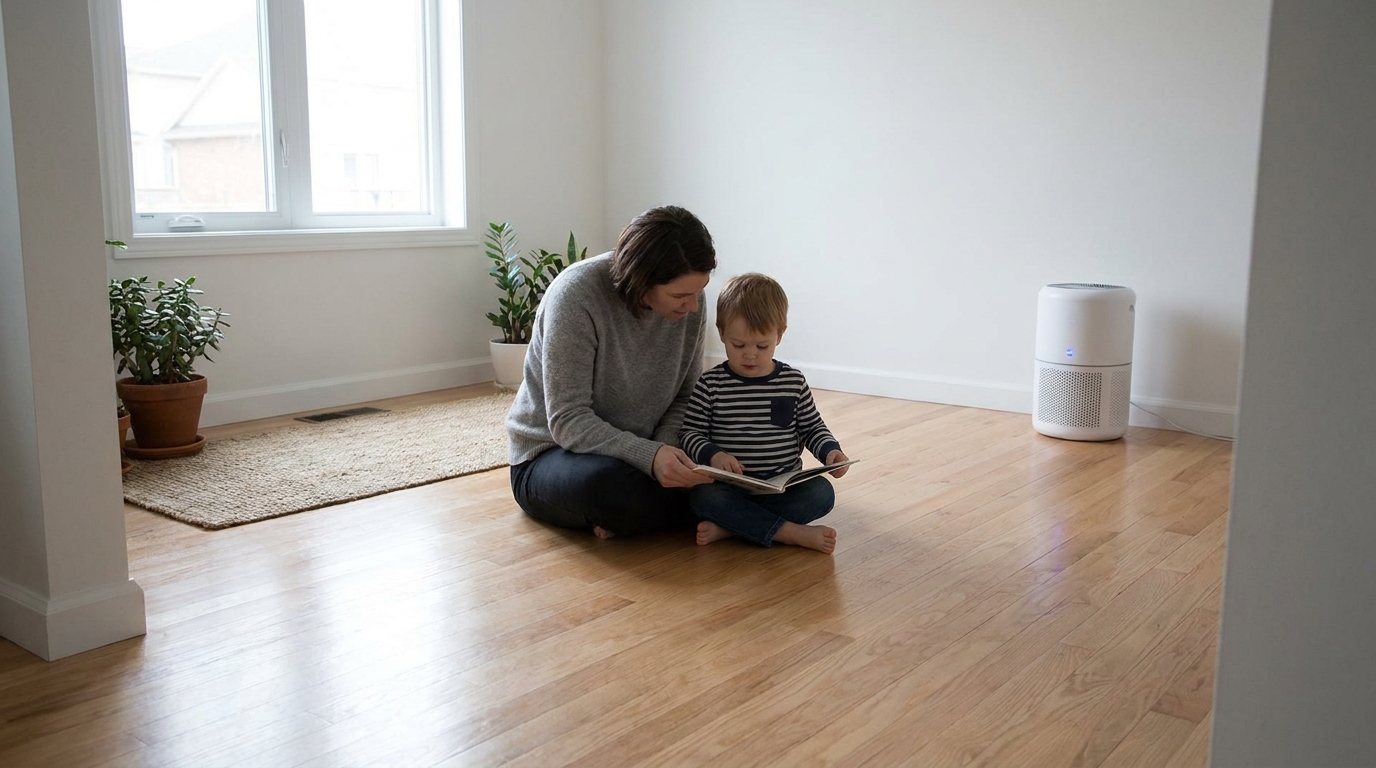
- Young children breathe faster, spend time on the floor, and put hands in their mouths — putting them closest to settled dust.
- Seniors and anyone with asthma, COPD, or allergies can have symptoms triggered or worsened by fine particulate.
- Allergy sufferers react to wood and gypsum dust that lingers for weeks.
Common short-term effects include coughing, throat and eye irritation, congestion, and aggravated asthma. The longer-term concern is repeated silica exposure, which is why professionals treat construction dust differently from household dust. The goal is simple: get it out of the home quickly and completely, rather than living alongside it for weeks.
📞 Get your free estimate today! Text or call 781-330-5604 · bluebrickmass@gmail.com
🧹 Why Regular Cleaning Doesn't Remove It
Reaching for the usual vacuum and duster after a renovation can make the air quality worse, not better:
- Dry dusting relaunches particles. A dry cloth or feather duster throws fine dust back into the air where it is inhaled and resettles.
- Household vacuums pass fine dust through. Without a true HEPA filter, the vacuum exhaust blows the smallest, most harmful particles straight back into the room.
- Surface cleaning ignores the reservoirs. Ducts, cabinet tops, and fixtures keep re-contaminating the air.
- One pass isn't enough. Fine dust settles in waves over days, so a single clean leaves plenty behind.
The equipment matters as much as the effort. Removing construction dust safely requires HEPA filtration and damp-capture technique — not a household vacuum and a dry cloth that simply move the finest particles around.
Win a Free Cleaning
Enter your email for a chance to win a complimentary home cleaning every month.
🛡️ How Professional Cleaning Protects Your Air
A proper post-construction clean is designed around removing fine particulate, not just visible mess. Here is how our crews protect your family's air across Greater Boston:
- True HEPA filtration. Our vacuums capture ultrafine particles instead of exhausting them back into the room.
- Damp-capture, top-to-bottom. Microfiber and damp methods trap dust rather than relaunching it, worked from high surfaces down.
- Every reservoir addressed. HVAC registers, cabinet tops, trim, fixtures, and tracks — the sources that keep re-dusting the air.
- Filter reset. We recommend and can replace the HVAC filter so the system stops recirculating dust.
- A follow-up pass. Catching the dust that settles over the following days for genuinely clean air.
The result is a home you can move back into with confidence — especially for the youngest and most vulnerable members of your family.
🗺️ Serving All of Greater Boston
We provide health-focused, HEPA-equipped post-construction cleaning for families across Greater Boston — because clean air after a renovation is not a luxury, it's a necessity.
Ready to get started? Text 781-330-5604 for a free, no-obligation estimate. We respond fast and can usually schedule within days.
❓ Frequently Asked Questions
Is construction dust dangerous to my health?
Fine construction dust contains crystalline silica, wood particles, gypsum, and chemical residues that can irritate the lungs, eyes, and throat. Brief exposure is usually a short-term irritant for healthy adults, but prolonged exposure and exposure for children, seniors, and people with asthma or allergies is a real concern — which is why it should be removed quickly and thoroughly.
Why is silica dust a concern after a renovation?
Crystalline silica from concrete, tile, mortar, and joint compound is extremely fine and can be inhaled deep into the lungs. Repeated exposure over time is associated with respiratory problems, so professionals use HEPA filtration and dust-capture methods to remove it rather than stir it back into the air.
Can I make the air worse by cleaning myself?
Yes. Dry dusting and household vacuums without true HEPA filtration relaunch the finest particles into the air, temporarily worsening indoor air quality. Damp-capture methods and HEPA equipment are what actually remove fine dust.
How do I protect my kids from renovation dust?
Keep children out of the space until it has been properly cleaned, ventilate the home, change the HVAC filter, and have a professional HEPA post-construction clean done that addresses hidden dust reservoirs. Children are most vulnerable because they spend time on the floor and breathe faster.
Does professional cleaning really improve indoor air quality after construction?
Yes. HEPA-filtered vacuuming, damp-capture cleaning, addressing HVAC registers and hidden reservoirs, and a follow-up pass remove the fine particulate that ordinary cleaning leaves behind — measurably reducing the dust circulating in your air. Text 781-330-5604 to schedule.